The Beatles
Bluegrass Songs
Blues Songs
Four-Holer Songs
TV/Movie Themes
Harmonicat Songs
Elvis Songs
Doo Wop Songs
Chromatic harp Tabs
Blues Keys
Blues Notes
My Notation
Key Change Table
Tab I need...
Amps...
Harp Club Search
Need a Midi?
How to tab songs
Favorite Recipes
Interesting Things
Family Images
Midi's To Tab

Your comments...
Harptalk Harpers
Determining a
Song Key...
Calculate the BPM
Training Your Ear
50 Worst Songs
One-hit Wonders
Worst 100 Singles
100 Best Movies' Songs
100 Best Country Songs
Most Depressing songs
Saddest Songs Ever
Best Heartbreak Songs
Saddest Songs
Of All Time
Best Breakup Songs
Elvis Presley Songs...
Neil Diamond Songs...
Lessons and help...
Interesting image out of Chicago about kids with harmonicas...
Diatonic or Chromatic
Harmonica
Band Handsigns
Bend Chart
Circle of Fifths
Circle of Fifths -
Zing Instruments
How do I use the Circle of Fifths in
connection with the harmonica?
Cross Harp -
Play "C" harp in key of "G"
Hohner Tuning Charts
Hohner (repairs address)
Music Theory Websites
Need a Midi song?
Quick Method to determine Key Signature from
sheet music (Martha Stewart would be
proud...)
Scales (also 2nd and 3rd Positions)
Carrying Cases
Chromatic Harmonica Information
How Harmonicas are
Made
How to
clean that harp after your drunk B-I-L slobbered all over it...
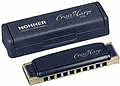 Hohner Cross
Harp
Hohner Cross
Harp
Cross Harp explained (easily, I hope).
This is also called 2nd position and
allows blues players and others to accent the DRAW reeds. For
Cross Harp, you have two things to
keep in mind - the SONG KEY (key that
the song was written in) and the HARMONICA KEY you will be using to actually
PLAY in Cross
Harp position. The song key is indicated in the music
sheet to the immediate right of the Staff using b's (flats) and #'s
(sharps). Each
harmonica is labeled with the key of that harp.
Also - keep in mind the chromatic music scale of all 12 keys (starting with a
"C" and
ending with a "C" ).
C C#/Db D D#/Eb E F F#/Gb G G#/Ab A A#/Bb B C
The C#/Db and F#/Gb, for example, are called enharmonic. They are the same sound but written differently. Sharps are enharmonic to flats.
The definition of semitone:
the musical interval between adjacent keys on the keyboard
instrument. There is an impropriety in the use of
this word and
"half-step" is preferred.
There are 12 "semitones" or half-steps to an octave.
There are two semitones to a "tone". A sharp raises the
pitch of a note by a
semitone. A flat lowers the pitch by a semitone.
The word ‘scale’ comes from the Italian word
‘scala’ which simply means ladder. In music, the scale is a way of climbing from
one note to the same note an octave higher.
The most familiar sounding scale in western music
is the major scale. Here’s how to build a major scale on your guitar.
Tone(1) Tone(1) Semitone(½) Tone(1) Tone(1) Tone(1) Semitone(½)
Whatever note you start on, playing this pattern of tones and semitones will produce a major scale.
| "C" Scale (C D E F G A B C) | |||||
|
Note |
From |
To |
Semitones Count |
Semitone Notes |
Note Degree |
| 1 | C | D | 2 | Db and D | Tonic |
| 2 | D | E | 2 | Eb and E | Super-tonic |
| 3 | E | F | 1 | F | Mediant |
| 4 | F | G | 2 | Gb and G | Sub-dominant |
| 5 | G | A | 2 | Ab and A | Dominant |
| 6 | A | B | 2 | Bb and B | Sub-mediant* |
| 7 | B | C | 1 | C | Leading tone |
| 8 | C | Upper tonic | |||
| * because it's 1/2 way
between Sub-dominant and upper Tonic |
|||||
C# is an Augmented
unison with the tone C or 1/2 step UP from middle C
Db is a minor 2nd
from the tone C or 1/2 step UP from middle C
C# and Db are the same tones or
pitch known as enharmonic
D is a major SECOND from the tone C. OR
D is a whole step UP from middle C
D# is an augmented 2nd from the
tone c or 1 1/2 steps UP from middle C
Eb is a minor 3rd
from the tone C or 1 1/2 steps UP from middle C
D# and Eb are the same tones
or pitch known as enharmonic
E is a major THIRD from the tone C or two whole
steps UP from middle C
E# is an augmented 3rd from the tone C or 2
1/2 steps UP from middle C
F is a PERFECT 4th from the tone c or 2
1/2 steps UP from middle C
F# is an augmented 4th from the tone C or 3 FULL steps up from middle
C
Here is a major scales starting on different notes written in notation form:
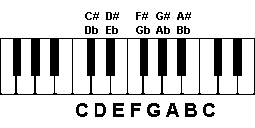
"C" scale on the
piano...
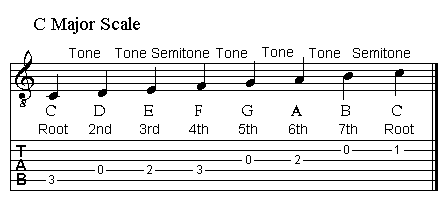
The b's are flats (one semitone down) and the #'s are sharps
(one semitone up). It's confusing but - C# and Db, for example, sound
alike - but
you'll typically see it written as Db and not C#. This is
actually one note between the C and D notes. See the table below for the
number of b's or #'s.
This will help you determine the SONG key when
seen on sheet music.
A sharp (#) is a symbol used to show that a
note has been raised one-half step.
A flat (b) is a symbol
used to show that a note has been lowered one-half step.
A natural sign is a symbol that indicates that a note
is neither sharp nor flat and is used to cancel out the sign that's in the key
signature for
THAT note only.
| Sharps/Flats -> | 0 | 1# | 2#'s | 3#'s | 4#'s | 5#'s | 6#'s | 7#'s | 1b | 2b's | 3b's | 4b's | 5b's | 6b's | 7b's |
| Song Key Harp | C | G | D | A | E | B | F# | C# | F | A#/Bb | D#/Eb | G#/Ab | C#/Db | Gb | Cb |
| Cross harp key | F | C | G | D | A | E | B | F# | A#/Bb | D#/Eb | G#/Ab | C#/Db | F#/Gb | B | E |
If you determine the song is written in the key of "C" (no #'s
or b's) AND you play the song with a "C" key harp, you are then playing the song
in
straight harp. Easy, huh? If you want to play the song
in Cross Harp fashion, you have two options:
1 - Count up 4 keys - including the song
key(5 half-steps), and this is the cross harp harmonica key to use. (You
would then be playing a song in the
key of "C" using a harmonica in the key
of "F", for example.) You will note from the matrix above that F is the
cross harp for a song written in the key of C. Technically speaking, the 5 -
half-steps are: C#/Db = 1, D=2, D#/Eb=3, E=4, F=5 - excluding
the song key using this method.
If someone says "this song is in Bb", you
simply count up 4 keys from Bb (Bb=1, C=2, C#/Db=3, Eb=4) to get Eb - the
harmonica key to use for 2nd
position. Keep in mind that the Bb
harmonica will have two b's (Bb and Eb) built-in and the Eb harmonica will have
three b's (Eb, Ab and Bb) built-in.
(The 5 half-steps would be: B=1,
C=2, C#/Db=3, D=4, D#/Eb=5 - again, excluding the song key.
2 - Use the harp key that corresponds to the song key
(harp key C and song key C) and play the song using the cross harp scale.
This is trickier.
You must adjust to the music scale of the cross harp
being used. For example, in Amazing Grace below, you will
see I am using a "C" key harp for
the "C" key song, but since most people
sing in the key of "G", I will transpose the song into the "G" scale (cross
harp) BUT - still using a "C" harp.
(a "-" before the number is a draw
note).
Using a "C" major
harmonica:
Top of page
Cross Harp "G"
-4 6 -7 6 -7
-6 6 5
-4
Note Letter:
D G B G B
A G E
D
Straight Harp "C"
6 7 8 7 8
-8 7 -6
6
Note Letter:
G C E C E
D C A
G
A maz ing Grace how sweet the sound
You
will note that you are lowering the tone by 4 notes (counting the note in the
"C" scale - C, B, A and arrive at "G"). Technically speaking, cross harp
is a system in which a diatonic harp is played in a key seven half-steps
up from the key in which the harp is tuned. For example, a "C"
major harp is used
or played for the song key of "G" (count: 1=C#/Db,
2=D, 3=D#/Eb, 4=E, 5=F, 6=F#/Gb, 7=G).
Stated slightly differently: for the song key of G, use
a harp key of "C" to play in cross harp. Many people find it
easier to simply count UP four notes
from the song key to find the 2nd
position harp key (G, A, B and then arrive at "C").
Another way to view cross harp is to look at it from the HARP key to the SONG key. For example:
| Harp key: | C | use this harp to play songs in keys of "C", "G", and "D" (count UP 5 notes) |
| G | use this harp to play songs in keys of "G", "D", and "A" (count UP 5 notes) | |
| D | use this harp to play songs in keys of "D", "A", and "E" (count UP 5 notes) | |
| A | use this harp to play songs in keys of "A", "E", and "B" (count UP 5 notes) | |
| F | use this harp to play songs in keys of "F", "C", and "G" (count UP 5 notes) | |
| Bb | use this harp to play songs in keys of "Bb", "F", and "C" (count UP 5 notes) |
John Lennon, of The Beatles fame, used second position
or Cross Harp fashion in many of his songs.
"I Should Have Known Better"
is in the song key of G and Lennon used a harmonica key of C.
"I'm a
Loser" was also written in the key of G but also played it on a harmonica in
the key of C.
"Thank You Girl" is written in the song key of D
and was played on a harmonica in the key of G.
"I'll Get You"
is written in the song key of D but he used a G harmonica.
"Little
Child" was written in the song key of E, but Lennon played it Cross Harp
using an A key harmonica.
Also: 1st position on a "C" harp is "C"
2nd position on a "C" harp is "G"
3rd position on a "C" harp is "D"
4th position on a "C" harp is "A"
5th position on a "C" harp is "E"
Bottom line:
Song key to harp key - (ex: G
song key to C harmonica key), count UP 4 notes. (G,A,B,C)
Harmonica key to
song key (ex: F harmonica key to C song key), count DOWN 5 notes.
(C,B,A,G,F)
Most common keys for a blues band: G, A, E and Bb
Most common keys for a folk band: C, D, G and A
Most common keys for a
rock band: E, A, G and C
Most common keys for use with horns or brass
instruments: F, Eb and Bb
I caught this "shortcut" for addressing 2nd position on the
internet and I am including it below. Any memory aid is worthwhile.
Just find one that
makes it "stick" for you.
An easy shortcut to find the 2nd position key
ON THE SAME HARMONICA - If your thumb is the key of the
harmonica (which is the same as the 1st position
key), count through the alphabet and stop at your "little finger" for
the 2nd position key. For example, your thumb is
"C" and your little finger is "G" (key of 2nd position on the "C" harmonica).
Instead of starting on the 4 blow ("C"), you would start on the 2 draw
("G").
You should note, in music, "A" follows "G". There
is no "H" note (C-D-E-F-G-A-B-C-D-E-F-G-A-B, etc.)
A
memory aid for 3rd Position: Whatever harp you're using, the 4 draw is
the tonic note for 3rd position. Example: You're
playing
with a "C" harp: The tonic for third position (the 4 hole "draw" note)
would be "D". You're playing with an
Eb harp: The tonic
for third position (the 4 hole "draw" note) would be "F".
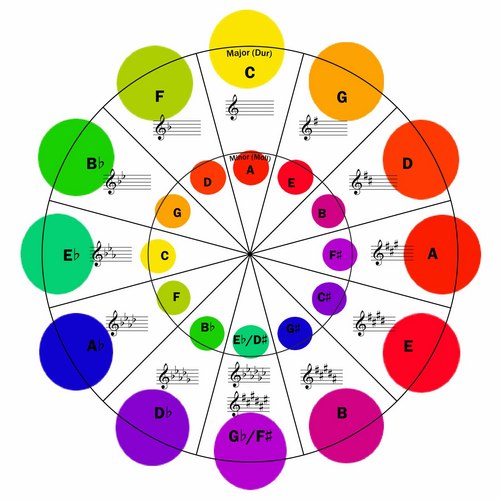
Top of page Circle of 5ths:
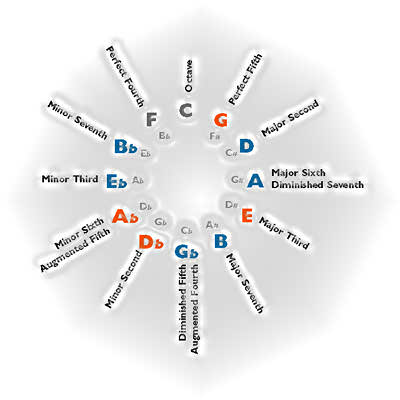
This is a very interesting Circle of Fifths indicating the Majors, Minors, Perfects, and Augments.
You can use this diagram to develop your musical
abilities, independent of any instrument. It is worth memorizing completely; you
will find this easier if you mentally equate it to a clock face. The outer
ring of letters gives key names; the inner ring shows which
sharps and flats
exist in each major key. For instance, D Major has F sharp and C sharp; note
that the order of the letters is the
same on the inner ring, it's just two
steps round. The outer ring gives the names of the intervals, from C.
To transpose any note by any interval:
Example 1. Say you need to transpose from C to E. You can see that this
interval is a major third, or twenty minutes around the
clock [it divides
the circle into equal thirds, too]. To transpose any note from C to E, find the
note on the outer ring, then go round
'twenty minutes' clockwise.
Example 2. Say you need to transpose from E to Gb. This is 'ten minutes'
round clockwise; ten minutes from C is D; the interval is
a major second.
Just go ten minutes clockwise from each note to find the transposed note.
The relative minor key is a major sixth (fifteen minutes) clockwise round
from the corresponding major key. For instance, the relative
minor of C major
is A minor. This will have the same sharps or flats as C major.
The colors are for use with a chromatic harmonica in the key of C which has a
slide to raise all notes by a semitone. Red = blow,
blue = draw, grey notes
can be either blow or draw (since, for instance, C is enharmonic with B sharp).
Squared Circle of Fifths - a very good page on additional Circle of Fifths
information
|
|
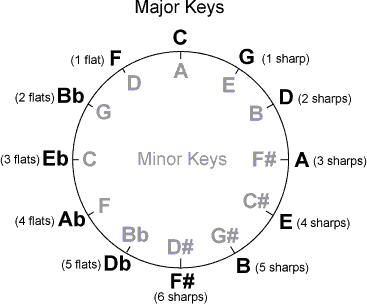
| The Circle of Fifths is an easy way
to find out the key a song is in. The Circle of Fifths tells you how
many sharps or flats are in a given key. C has no sharps or flats. It is called the Circle of Fifths because as you go clockwise you go up a fifth. For example, the fifth note (1 o'clock) of the C major scale is G. The fifth note of the G major scale is D, and so on. SEE THE DIATONIC SCALES BELOW.
Memory aid: Notice that every other note is
succeeded by the one before: C, skip G, D, skip A,
E, etc. Also notice how there are twelve notes corresponding Also, notice that G through E, each letter has as
many penstrokes in writing the letter as it does sharps. G is made
with one penstroke and has one sharp. Note: see inside the Circle of Fifths for the Minor
Keys. Use the Harp Key on the outside of the circle for the
proper harmonica to use. |
Also see: Scales link
So - How do I use
the Circle of Fifths in connection with the harmonica?
Top of page
If the song is in "F" and you play it with an "F" harp, you're
playing the song in 1st position.
If the song is in "F" and you play it with
a "Bb" harp, you're playing the song in 2nd position.
If the song is in "F"
and you play it with a "C" harp, you're playing the song in 12th position.
If
the song is in "F" and you play it with a "G" harp, you're playing the song in
11th position.
Study hard - there will be a "pop" quiz tomorrow...
Additional link for crossharp: http://www.crossharp.com/key_table.htm
The C Major scale:
C D E F G A B C
When we talk about scales,
we almost never refer to the notes, or letters, because the same rules apply to
all scales, so we refer to
them by degrees, and each degree is assigned
names and numbers depending on the system you use:
C Tonic
D
Super-tonic
E Mediant
F Sub-Dominant
G Dominant
A Sub-Mediant
B
Leading Tone *
C I
D
II
E III
F IV
G
V
A VI
B VII
C
do
D re
E mi
F
fa
G sol
A la
B
ti
*The VII note in the scale is sometimes referred to as the subtonic,
but in the case of a major scale, it's only one-half step below the
tonic, so it sound like it's leading to the tonic, releasing the
musical
tension, thus in the major scale it's called a leading tone.
Need harmonica repairs or reeds for the Hohner?
AFAIK, you CANNOT order individual reeds online directly from Hohner USA. The
individual reeds must be ordered from
the Hohner Repair group. The toll free
phone number is 1-800-446-6010. I presume (since they give an email address)
that you can also contact them via email. I just call the 800 number and ask for
the repair shop (extension 327, I THINK),
which is either Sissy Jones or
Bill Bucco. Tell them which reed(s) you need and the quantities, and they will
give you a
price quote over the phone. Give them your "plastic" number and
they will get the order in the mail to you promptly. I
got mine in 3 days.
Here's the complete contact info from the Hohner USA site:
Hohner,
Inc.
1000 Technology Park Drive
Glen Allen, Virginia 23059-4500
Phone
Toll Free: 800-446-6010
Fax: 804-515-0189
e-mail: webinfo@hohnerusa.com
HTH,
Crazy Bob
Need help with music theory? What is a scale? What is a
Key Signature? Click on this link to go to Ricci Adams' music
theory
website. You'll be surprised by how quickly you can learn everything you
need to understand music...
Music Theory websites
Top of page
Everyone
interested in learning to play the harmonica should be well-versed in music
theory. It's almost insane to say "I play
harp - but I don't read
music."
http://www.musictheory.net/
Need help on music theory? Try this site also:
And this one: http://tyala.freeyellow.com/4scales.htm#MajMin
Talking into the harmonica and other useful information:
Choking: Usually used with the "ck"
sound made when you draw in air and close off the back of the throat.
When you say the word "duck", you will note that the tongue has 3 different
positions. The "d" sound has the tongue at the back of the upper front
teeth, the "u" sound has the tongue somewhat horizontal in the mouth and the
"ck" has the tongue at the throat choking off the airflow. If you draw
in the air and play a draw 2 or 3 note, you will hear that choking sound.
Sliding: This is a simple method of adding "color" to your playing. You simply start with either a blow or draw hole that is a hole or two lower than the note you want to start with. You simply "slide" to the correct note and begin playing. This can be done at the start of the piece or in various spots in the musical piece. To do this correctly, do not take timing away from the note your playing - but rather take the timing from the preceding note.
Grace Notes: These are done by blowing
or drawing a note below the note you want to play. This is done very
quickly and adds color to the musical piece. You will find that you
can add grace notes almost anywhere within the piece to add rhythm and
color.
Shake: This is an effect that can be a crowd pleaser.
Simply play two holes (blow or draw) and move the harmonica back and forth.
This is all done on one blow or one draw and is done very quickly between
the two holes.
Syncopation: When you play music in
4/4 time, you can count the beats as:
1 and 2 and 3 and 4 and
| 1 and 2 and 3 and 4 and | If tapping, you foot is raised
on the "and".
When you do this, you are playing the note "on" the number.
In syncopation, you play the note on the "and" part before the note and the
beat carries over to the next number as normal.
Words you talk into the harmonica to get
different sounds:
Duck
chuck
too
wee
too-wee
dit
(used to stop the airflow - keep the tongue at the front of the teeth when
saying the "t")
toil
oil
yo
loo
yi
ta
ka
cha
ba
la
da ta
chuck a
ta ta
Vibrato: when you play, use the
right hand to open and close quickly over the back of the left hand. This
changes the airflow and can add a wah-wah sound to your playing. Some
people will use the back of the throat to play vibrato into the harmonica.
Some people find that moving the fingers slightly at the back of the harmonica
will also cause a slight vibrato effect. Play it by ear as to how much
vibrato you want to use.
Overblows and Overdraws
If you "overblow" a harp hole, you can raise the pitch anywhere from 2 - 5 semitones (ST) depending on the hole you're working on. When you overblow, you're actually getting the draw reed to go backwards.
On a "C" harp, for instance:
Hole 1 blow is a "C" and a "D" when you draw. You can overblow to get an Eb (1 ST above "D" and 3 ST's above the "C")
Hole 2 blow is an "E" and a "G" when you draw. You can overblow to get an Ab (1 ST above "G" and 4 ST's above "E")
Hole 3 blow is a "G" and a "B" when you draw. You can overblow to get a C (1 ST above "B" and 5 ST's above "G")
Hole 4 blow is a "C" and a "D" when you draw. You can overblow to get an Eb (1 ST above "D" and 3 ST's above the "C")
Hole 5 blow is an "E" and an "F" when you draw. You can overblow to get a Gb (1 ST above "F" and 2 ST's above "E")
Hole 6 blow is a "G" and an "A" when you draw.
You can overblow to get Bb (1 ST above "A" and 3 semitones above "G")
Then we get to the "overdraws" on holes 7 - 10. Now your making the "blow" reed work opposite the "draw" reed.
Hole 7 blow is a "C" and a "B" when you draw. You can overdraw to get Db (1 ST above "C" and 2 ST's above "B")
Hole 8 blow is an "E" and a "D" when you draw. You can overdraw to get an F (1 ST above "E" and 3 ST's above "D")
Hole 9 blow is a "G" and an "F when you draw. you can overdraw to get an Ab (1 ST above "G" and 3 ST's above "F")
Hole 10 blow is a "C" and an "A" when you draw. You can overdraw to get a Db (1 ST above "C" and 4 ST's above "A")
You can use the same methodology for determining the notes you can get on other keyed harps. Use the scales for harmonicas listed further down as your guide. Overblowing and overbending are very difficult and requires patience and practice.
Riffs and Licks
Received from HarpTalk at Yahoo.com:
There is a distinction betwen riffs
and licks. Most people think of them as being one and the same, but they
are not quite the same. BTW, showing your ignorance means showing your
intelligence, i.e., you are intelligent enough to ask the question. The
only stupid question is the one not asked.
The www.newtojazz.com defines a riff
as,
".... a short ostinato, two to four bars long."
It further defines
an ostinato as,
"A short melodic, rhythmic, or harmonic pattern that is
repeated throughout an entire composition or some portion of a composition."
Thus, a RIFF has an essential characteristic of being repeated. A LICK can be a one-time shot. The part of a RIFF that is repeated could be a LICK. But once it's repeated, it becomes a RIFF.
(attributed to Larry Boy Pratt at www.parkhousejam.com
Intervals and music theory items:
Intervals are named according to the "Diatonic
Scale" or "Major Scale". In the "C" scale, the Root Note is "C" and the
next intervals are "D", "E", "F", "G", "A", and "B"
Some intervals can
have two names such as a C# and a Db. These are also called enharmonics.
Some intervals in the diatonic scale do not exist such as a E# or Fb or B# or
Cb.
In music, the distance between two sounds is called the interval. The interval between two C’s or two E’s is called an octave. In terms of frequency, doubling the frequency of any note increases the pitch by an octave.
A "sharp" note is a note one-half step above
another note.
A "flat" note is a note one-half step below another note.
A "root note" is the first note in a major scale.
The Major 3rd:
The 'major 3rd' is the first note and third note of the major
scale. If you start with "A", count up FOUR semitones to get to "C#". But - the
3rd note in the diatonic scale is the "C#". Since the "A" scale has 3 #'s,
the first sharp is the "C#"
The Minor Third:
The 'minor 3rd' is the 1st note and the 3rd note of the major
scale lowered by a semitone (actually the lowered 3rd is the 3rd note of the
minor scale). If you start with "A", count up THREE semitones to get to
"C" (this "C" would be "natural" - no sharp.)
Chords:
Chords have a "bass" note,
the root, on which the chord is named.
A "C" Major chord has the
notes C-E-G. The "C" is the bass note. A "G" chord has the "G" bass
note and contains the notes G-B-D. A G7 (called G seventh) are
G-B-D-F notes and you would "draw" on holes 2,3,4 and 5 and the same time
on a "C" harmonica. And oddity is the D7 chord which has the notes
D-F#-A-C. The F#, however, is impossible so the single notes of D, or and
A or a C are played instead. Chords played in a sequence are called a
progression.
Note: If you want, you can make tonal variations. Example: a 4 blow "C" can be done using the single note, or you could do a 345 blow or a 34 blow or a 45 blow. It's important that the tone have the 4 blow note included. The harmonica is constructed so that any two holes that are next to each other will produce sounds that go together very well.
Bending:
When you "bend" a note, you are playing it below its true pitch. As you
draw on the note, you will need to pull your tongue to the back of your mouth
and position it against the bottom of your jaw. On hole 3, bending allows
you to independently reach 3 "hidden" notes that are not on regular harmonicas.
In many songs, you will find that you need to either learn to bend the draw hole
to reach that note - or you may have to play an octave higher where the notes
are more readily accessible. Playing in a higher pitch may not make the
song sound the best. I suggest you make some time to learn how to bend
notes.
Overblows: This is an embrouchure technique that makes a blow note in holes 1 - 6 move up in pitch.
Blowbend: This is an embrouchure technique that makes a blow note in holes 7 - 10 go down in pitch.
Octave Note Substitution:
When you play a diatonic harmonica, you get a
full octave of that harmonica key using holes 4 thru 7 (middle octave). If
you use the lower octave's first 3 holes, you are missing notes F, A and C.
On the upper octave, you are missing notes C and B from the complete scale.
To get these missing notes, you have to use a technique called Bending as noted
above or use Octave Note Substitution. The construction of the harmonica
requires the current hole/note scheme so that chords are easy to play.
Octave notes are those that have the same letter name but there is a difference
in pitch.
By using substitution, you can consider using the missing note in the scale from another octave. Here is an example:
| Hole--> | 7 | 8 | 8 | 9 | 9 | 10 | 7 | 7 |
| Blow | Draw | Blow | Draw | Blow | Draw | Draw | Blow | |
| Note | C | D | E | F | G | A | B | C |
|
"It is easy
to get good at harmonica. |
Interesting item on mics:
A controlled
magnetic element will give more distortion of the output. You can get a
much "cleaner" sound from a crystal or
a dynamic element. Vocal
mics will also give you this cleaner sound. If you want more
"accurate" reproduction of your acoustic
sound, use a cleaner sounding mic.
Tom Albanese gets this credit:
Handsigns used by musicians to signal
the key to play the song in:
Clockwise on the Circle of Fifths above:
No fingers (closed or solid fist) = C
1 finger up = G
2
fingers up = D
3 fingers up = A
4 fingers up = E
5 fingers up = B
6
fingers up (or down) = F#
Counter-clockwise on the Circle of
Fifths:
1 finger down = F
2 fingers down = Bb
3 fingers
down = Eb
4 fingers down = Ab
5 fingers down = Db
|
Harp |
Diatonic Scales |
#'s/b's |
Cross |
3rd |
|||||||
| A | A | B | C# | D | E | F# | G# | A | 3#'s | D | G |
| Ab | Ab | Bb | C | Db | Eb | F | G | Ab | 4b's | C#/Db | F#/Gb |
| B | B | C# | D# | E | F# | G# | A# | B | 5#'s | E | A |
| Bb | Bb | C | D | Eb | F | G | A | Bb | 2b's | Eb | Ab |
| C | C | D | E | F | G | A | B | C | - | F | A#/Bb |
| D | D | E | F# | G | A | B | C# | D | 2#'s | G | C |
| Db | Db | Eb | F | Gb | Ab | Bb | C | Db | 5b's | F#/Gb | B |
| E | E | F# | G# | A | B | C# | D# | E | 4#'s | A | D |
| Eb | Eb | F | G | Ab | Bb | C | D | Eb | 3b's | G#/Ab | C#/Db |
| F | F | G | A | Bb | C | D | E | F | 1b | A#/Bb | D#/Eb |
| F# | F# | G# | A# | B | C# | D# | E# | F# | 6#'s | B | E |
| G | G | A | B | C | D | E | F# | G | 1# | C | F |
Order or Sharps (#'s): G(1#) D(2#'s) A(3#'s) E(4#'s) B(5#'s) F#(6#'s) C#(7#'s)
Order of Flats (b's): F(1b) Bb(2b's) Eb(3b's) Ab(4b's) Db(5b's) Gb(6b's) Cb(7b's)
Quick method to determine the signature key when viewing sheet music: Top of page
Sharps: The name of the sharp major
key can be determined by moving UP a half step from the LAST sharp.
Ex: LAST sharp (far right) of 5 sharps is on the "A" line (of FACE), then
up 1/2 step from A# is B major.
Thus, B major has 5 sharps and the song key is B major.
Flats: The name of a flat major key
can be determined by the name of the NEXT -T0 - LAST flat.
Ex: Next to last flat (far right) of 4 flats is on the "A" line (of FACE),
then the signature key is Ab major.
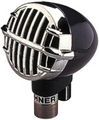
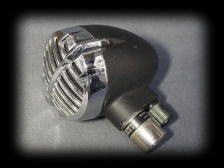
Hohner Blues Blaster microphone.
Astatic JT-30VC
I
have one of these babies -
produces very good tones.
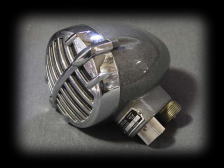
Astatic JT-30 Custom
Crystal microphones such as Hohner Blues
Blaster, Astatic JT-30, etc., are popular for harmonica. When run into the
proper impedance input,
they sound quite good. When run into a lower
impedance, they become very trebly.
Want to see more microphones? Try: http://harpist.taka.pro.tok2.com/mic.htm
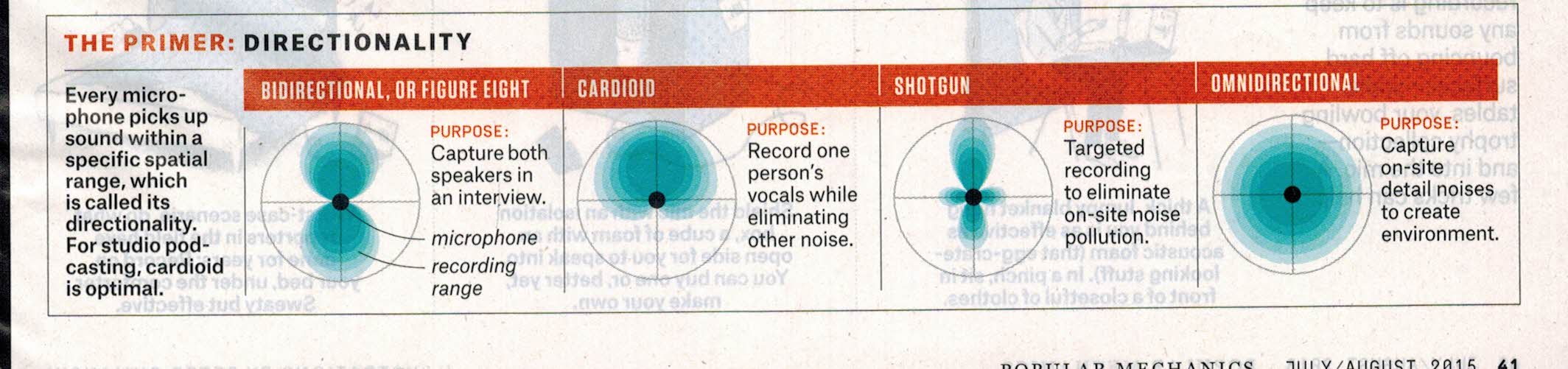
Microphones - Directionality is important in selecting a
microphone for the correct purpose of use.
Directionality
Harmonica Key Labels
Want to label your harps with a letter large enough to easily see the key?
Try this website:
http://www.harmonicamasterclass.com/labels.htm
|
|
|
|
| Aluminum Carrying Case | Aluminum Carrying Case and Leather Carrier | |
|
|
|
|
| Leather Carrier Open | Leather Carrier | Aluminum Carrying Case and Leather Carrier |
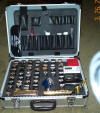

The ART TubeMP OPL
(Applied Research and Technology Tube Microphone Pre-Amplifier with OPL Output
Protection Limiter). Quite a mouthful - but it's more commonly referred to
as the ART OPL.
Some things you should know:
- Built-in
hand selected 12AX7A Tube
- OPL - Output Protection
Limiter
- Provides over 60 DB of gain
- Variable input and output gain controls
- XLR and 1/4"
Inputs and outputs
- +48V phantom power and phase reversal
switch
- Also functions as a direct box, with impedance
matching and pre-amplification for line-level sources. Contact them at
www.artproaudio.com
- 1.5 Lbs
- 5.25" L x
5.5"W x 2.0"H
- 1- Hz - 20kHz
- >100
Db Dynamic Range
- 9 VAC power supply
 Click to enlarge
So - the question is:
I want to replace my 12AX7 preamp tubes
with either 12AT7 or 12AU7
tubes. Which of the two should be more
effective in reducing feedback?
12ax7= gain of 100
12at7= gain of 60
12ay7= gain of 44
12au7= gain of 17
The higher the gain factor, the more
chance of feedback.
Electricity rules:
Current = Voltage / Resistance (I=E/R)
10 V out into 8 Ohms = 1.25 Amps
10 V out into 4 Ohms = 2.50 Amps
Power = Current * Voltage (P=IE)
1.25 A * 10 V = 12.5 Watts
2.50 A * 10 V = 25.0 Watts
Assuming that the amp delivers the same
voltage output with both speakers,
power goes up as impedance goes down.
A Pentatonic: A C D F G A
G Pentatonic: G A C D F G
C Pentatonic: C D F G A C
C Blues scale: C Eb F Gb G Bb C
D Minor Pentatonic: D F G A C D
G Blues scale: G Bb C Db D F G
F Pentatonic scale: F G A C D F
D Blues scale: D F G Ab A C D
Bend Chart			Top of page


                                |Bb|-(")whole-step bend
                          |Eb|Gb|B |-(')half-step bend
     |=============================|
 blow|C |E |G |C |E |G |C |E |G |C |
      1  2  3  4  5  6  7  8  9 10
 draw|D |G |B |D |F |A |B |D |F |A |
     |=============================|
      Db|Gb|Bb|Db|  |Ab|------------(')half-step bend
        |F |A |---------------------(")whole-step bend
           |Ab|--------------------("')step and one-half bend

Tips for bending the lower notes:

Try sounding these vowel letters while playing:
	"E"  will give the normal unbent tone
	"EW" will give a 1/2 step bend
	"O"  will give a full step bend
	"aww" - use this to give a stronger attempt to bend a full step.
		use this also to give a 1 1/2 step bend on 3 draw.
Interesting article on the methodology that happens within a harmonica when you attempt to "bend" a note.  There are actually two reeds
working together to make this happen.
Musical Dictionary for terms:
http://www.creativemusic.com/features/dictionary.html
http://www.austinsymphony.org/music/index.asp
http://musicnet.chandra.ac.th/eng/mus_dic.htm#GlossaryC
Bridge -a transition or passage in music connecting two movements
Refrain - Same as Chorus
| Song Key | Cross Harp | Third Position |
| G#/Ab | C#/Db | F#/Gb |
| A | D | G |
| A#/Bb | D#/Eb | G#/Ab |
| B | E | A |
| C | F | A#/Bb |
| C#/Db | F#/Gb | B |
| D | G | C |
| D#/Eb | G#/Ab | C#/Db |
| E | A | D |
| F | A#/Bb | D#/Eb |
| F#/Gb | B | E |
| G | C | F |
Scales:
| Do | Re | Mi | Fa | So | La | Ti | Do | |
| I | II | III | IV | V | VI | VII | VIII | |
| Blues | Do | Mi Flatted | Fa | So Flatted | Ti | Do | ||
| "C" | C | D | E | F | G | A | B | C |
12TET = 12 Tone Even Tempered (found in Lee Oskar and Golden Melody)
JIT = Just Intonation Tuning (found in Marine Bands, S20)
Need to find a MIDI file? Top of page
Searching the Internet for a Certain MIDI File
Regular Tunings - I can't explain
this...
Tuning Chart of the Hohner Diatonics: Top of page
| Hole | 1 | 2 | 3 | 4 | 5 | 6 | 7 | 8 | 9 | 10 |
| 1 tone | E | A | Db | E | G | B | Bb | |||
| 1 semi | Eb | Ab | C | Eb | F# | Bb | Eb | Gb | B | |
| Blow | C | E | G | C | E | G | C | E | G | C |
| Draw | D | G | B | D | F | A | B | D | F | A |
| 1 semi | Db | Gb | Bb | Db | Ab | Db | F | Ab | Db | |
| 1 tone | F | A | D | F# | B | D | ||||
| 1 1/2 semi | Ab |
| Hole | 1 | 2 | 3 | 4 | 5 | 6 | 7 | 8 | 9 | 10 |
| F | ||||||||||
| F# | ||||||||||
| Bb | Db | Gb | ||||||||
| Blow | G | B | D | G | B | D | G | B | D | G |
| Draw | A | D | F# | A | C | E | F# | A | C | E |
| 1 semi | Ab | Db | F | Ab | Eb | |||||
| 1 tone | c | E | ||||||||
| 1 1/2 semi | Eb |
| Hole | 1 | 2 | 3 | 4 | 5 | 6 | 7 | 8 | 9 | 10 |
| C | ||||||||||
| F | Ab | Db | ||||||||
| Blow | D | F# | A | D | F# | A | D | F# | A | D |
| Draw | E | A | C# | E | G | B | C# | E | G | B |
| 1 semi | Eb | Ab | C | Eb | Bb | |||||
| 1 tone | G | B | ||||||||
| 1 1/2 semi | Bb |
| Hole | 1 | 2 | 3 | 4 | 5 | 6 | 7 | 8 | 9 | 10 |
| G | ||||||||||
| C | Eb | Ab | ||||||||
| Blow | A | C# | E | A | C# | E | A | C# | E | A |
| Draw | B | E | G# | B | D | F# | G# | B | D | F# |
| 1 semi | Bb | Eb | G | Bb | F | |||||
| 1 tone | D | Gb | ||||||||
| 1 1/2 semi | F |
Ab/G#
Scale: Ab
Bb C Db Eb F G
Ab
| Hole | 1 | 2 | 3 | 4 | 5 | 6 | 7 | 8 | 9 | 10 |
| Gb | ||||||||||
| B | D | G | ||||||||
| Blow | Ab | C | Eb | Ab | C | Eb | Ab | C | Eb | Ab |
| Draw | Bb | Eb | G | Bb | Db | F | G | Bb | Db | F |
| 1 semi | A | D | Gb | A | E | |||||
| 1 tone | Db | F | ||||||||
| 1 1/2 semi | E |
Db/C#
Scale: Db
Eb F Gb Ab Bb C
Db
| Hole | 1 | 2 | 3 | 4 | 5 | 6 | 7 | 8 | 9 | 10 |
| B | ||||||||||
| E | G | C | ||||||||
| Blow | Db/C# | F | Ab | Db/C# | F | Ab | Db/C# | F | Ab | Db/C# |
| Draw | Eb | Ab | C | Eb | Gb | Bb | C | Eb | Gb | Bb |
| 1 semi | D | G | B | D | A | |||||
| 1 tone | Gb | Bb | ||||||||
| 1 1/2 semi | A |
| Hole | 1 | 2 | 3 | 4 | 5 | 6 | 7 | 8 | 9 | 10 |
| D | ||||||||||
| G | Bb | Eb | ||||||||
| Blow | E | Gb | B | E | Gb | B | E | Gb | B | E |
| Draw | F# | B | D# | F# | A | C# | D# | F# | A | C# |
| 1 semi | F | Bb | D | F | C | |||||
| 1 tone | A | Db | ||||||||
| 1 1/2 semi | C |
| Hole | 1 | 2 | 3 | 4 | 5 | 6 | 7 | 8 | 9 | 10 |
| Eb | ||||||||||
| Ab | B | E | ||||||||
| Blow | F | A | C | F | A | C | F | A | C | F |
| Draw | G | C | E | G | Bb | D | E | G | Bb | D |
| 1 semi | Gb | B | Eb | Gb | Db | |||||
| 1 tone | Bb | D | ||||||||
| 1 1/2 semi | Db |
A#/Bb:
Scale: Bb
C D Eb F G A
Bb
| Hole | 1 | 2 | 3 | 4 | 5 | 6 | 7 | 8 | 9 | 10 |
| Ab | ||||||||||
| Db | E | A | ||||||||
| Blow | A#/Bb | D | F | A#/Bb | D | F | A#/Bb | D | F | A#/Bb |
| Draw | C | F | A | C | Eb | G | A | C | Eb | G |
| 1 semi | B | E | Ab | B | Gb | |||||
| 1 tone | Eb | G | ||||||||
| 1 1/2 semi | Gb |
| Hole | 1 | 2 | 3 | 4 | 5 | 6 | 7 | 8 | 9 | 10 |
| Db | ||||||||||
| Gb | A | D | ||||||||
| Blow | D#/Eb | G | Bb | D#/Eb | G | Bb | D#/Eb | G | Bb | D#/Eb |
| Draw | F | Bb | D | F | Ab | C | D | F | Ab | C |
| 1 semi | E | A | Db | E | B | |||||
| 1 tone | Ab | C | ||||||||
| 1 1/2 semi | B |
F#/Gb:
Scale: F#
G# A# B C# D# E#
F#
| Hole | 1 | 2 | 3 | 4 | 5 | 6 | 7 | 8 | 9 | 10 |
| E | ||||||||||
| A | C | F | ||||||||
| Blow | F#/Gb | A# | C# | F#/Gb | A# | C# | F#/Gb | A# | C# | F#/Gb |
| Draw | G# | C# | E#/F | G# | B | D# | E#/F | G# | B | D# |
| 1 semi | G | C | E | G | D | |||||
| 1 tone | B | Eb | ||||||||
| 1 1/2 semi | D |
| Hole | 1 | 2 | 3 | 4 | 5 | 6 | 7 | 8 | 9 | 10 |
| A | ||||||||||
| D | F | Bb | ||||||||
| Blow | B | D# | F# | B | D# | F | B | D# | F# | B |
| Draw | C# | F# | A# | C# | E | G# | A# | C# | E | G# |
| 1 semi | C | F | A | C | G | |||||
| 1 tone | E | Ab | ||||||||
| 1 1/2 semi | G |
What is Richter Tuned and what is Solo Tuned?
The Standard diatonic
(scale) in "C" is:
| Blow | C | E | G | | | C | E | G | | | C | E | G | | | C |
| Draw | D | G | B | | | D | F | A | | | B | D | F | | | A |
In the above scale, you will note that 3 notes are missing: F, A, and B
With Solo Tuned harps such as the Huang Cadet Soloist and the Hering Master Solo, the tuning is changed to this: (note the two extra holes...)
| Blow: | C | E | G | C | | | C | E | G | C | | | C | E | G | C |
| Draw | D | F | A | B | | | D | F | A | B | | | D | F | A | B |
Chromatic Harmonica - "C"
(Notice the patterns)
Top of page
Also -
remember the Chromatic Scale:
C C#/Db
D D#/Eb E F F#/Gb G
G#/Ab A A#/Bb B C
|
Push Blow |
1 | 2 | 3 | 4 | 5 | 6 | 7 | 8 | 9 | 10 | 11 | 12 |
|
C# Db |
F |
G# Ab |
C# Db |
C# Db |
F |
G# Ab |
C# Db |
C# Db |
F |
G# Ab |
C# Db |
|
| C | E | G | C | C | E | G | C | C | E | G | C | |
|
Draw Push |
D | F | A | B | D | F | A | B | D | F | A | B |
|
D# Eb |
F# Gb |
A# Bb |
C |
D# Eb |
F# Gb |
A# Bb |
C |
D# Eb |
F# Gb |
A# Bb |
D |
It's important to remember that the above Chromatic can be used to tab any song. BUT - if you tab a song in "D" for example, the "D" scale has 2 sharps (C# and F#). That means you would have to "push" 2, 6 or 10 DRAW to get the F# and you would have to "push" the 1, 4 (or 5), 8 (or 9), or 12 BLOW to get the C#. This holds true for any of the scales other than "C" because they all have sharps and flats you need to consider when using the slide feature of the Chromatic.
You'll see from the above that the Chromatic Harmonica 12-hole has 3 octaves - lower, middle and high. The same pattern repeats for each octave. Simply memorize one pattern and you use that same pattern into the next octave(s).
If you want to play the "C" scale:
| Scale | C | D | E | F | G | A | B | C |
| Hole | 1 | -1 | 2 | -2 | 3 | -3 | -4 | 5 |
If you want to play the "G"
scale: ("P" for "push" the slide in)
| Scale | G | A | B | C | D | E | F# | G |
| Hole | 3 | -3 | -4 | 5 | -5 | 6 | -6P | 7 |
If you want to play the "D" scale: ("P" for "push" the slide in)
| Scale | D | E | F# | G | A | B | C# | D |
| Hole | -1 | 2 | -2 | 3 | -3 | -4 | 4P | -5 |
If you want to play the "A"
scale: ("P" for "push" the slide in)
| Scale | A | B | C# | D | E | F# | G# | A |
| Hole | -3 | -4 | 5P | -5 | 6 | -6P | 7P | -7 |
If you want to play the "E"
scale: ("P" for "push" the slide in)
| Scale | E | F# | G# | A | B | C# | D# | E |
| Hole | 2 | -2P | 3P | -3 | -4 | 5P | -5P | 6 |
If you want to play the "B"
scale: ("P" for "push" the slide in)
| Scale | B | C# | D# | E | F# | G# | A# | B |
| Hole | -4 | 5P | -5P | 6 | -6P | 7P | -7P | -8 |
If you want to play the "F#"
scale: ("P" for "push" the slide in)
| Scale | F# | G# | A# | B | C# | D# | F | F# |
| Hole | -2P | 3P | -3P | -4 | 5P | -5P | -6 | -6P |
If you want to play the "F"
scale: ("P" for "push" the slide in)
| Scale | F | G | A | Bb | C | D | E | F |
| Hole | -2 | 3P | -3 | -3P | 5 | -5 | 6 | -6 |
If you want to play the "Bb"
scale: ("P" for "push" the slide in)
| Scale | Bb | C | D | Eb | F | G | A | Bb |
| Hole | -3P | 5 | -5 | -5P | -6 | 7 | -7 | -7P |
If you want to play the "Eb"
scale: ("P" for "push" the slide in)
| Scale | Eb | F | G | Ab | Bb | C | D | Eb |
| Hole | -1P | -2 | 3 | 3P | -3P | 5 | -5 | -5P |
If you want to play the "Ab"
scale: ("P" for "push" the slide in)
| Scale | Ab | Bb | C | Db | Eb | F | G | Ab |
| Hole | 3P | -3P | 5 | 5P | -5P | -6 | 7 | 7P |
If you want to play the "Db"
scale: ("P" for "push" the slide in)
| Scale | Db | Eb | F | Gb | Ab | Bb | C | Db |
| Hole | 1P | -1P | -2 | -2P | 3P | -3P | 5 | 5P |
From
Jan 1, 2007
For more information on these songs or artists, my visitors use this to search the internet...